Inspeqtr℠
Automated Quality Inspection
Automated Quality Inspection That Catches What AOI Misses
Reduce escape defects, rework, and warranty claims with vision AI that runs on the hardware you already have—and keeps your data in your plant.
Problem Statement
Even with AOI and manual inspection, defects still slip through:
Escape defects: 0.5–2% of units leaving the plant with hidden or missed issues
Rework & scrap: 5–10% of production cost tied up in fixing what should have been right first time
Manual bottlenecks: Inspectors can’t keep up with line speed—especially on complex PCB, auto, and pharma lines
Inconsistent decisions: Different inspectors on different shifts = different quality thresholds
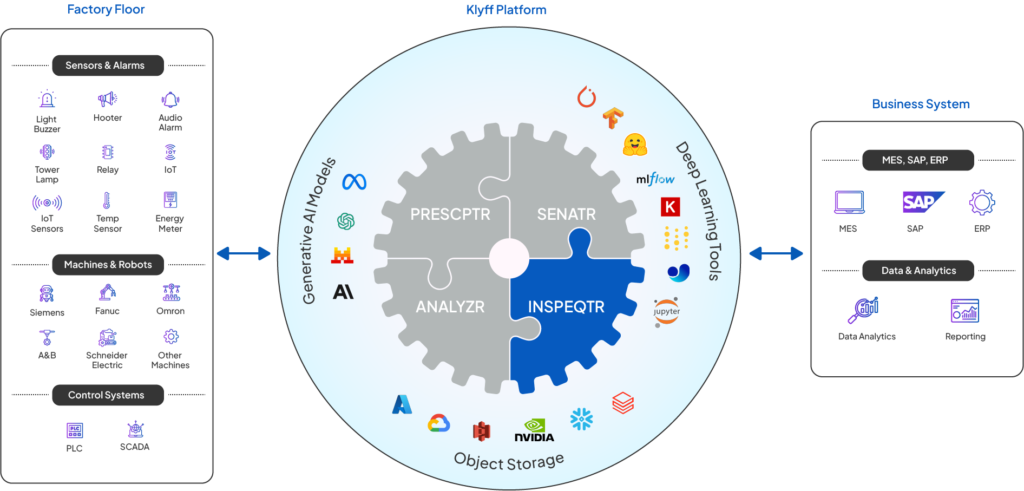
Klyff’s Automated Quality Inspection is built to sit on top of your existing lines, cameras, and AOI to catch the defects that get through today—and do it at full line speed.
Klyff Inspeqtr Delivers
Quantifiable outcomes (typical ranges):
Escape rate: ~1.5% → 0.3% or lower
FPY (First Pass Yield): +2–4 percentage points (e.g., 94% → 97–98%)
Rework cost: $250K–$500K/year savings per site (depending on volume)
Inspection time: From 100% manual to fully automated, real-time at line speed
Key differentiators:
Catches what AOI misses: Weak solder joints, subtle paint defects, misalignments, label errors, surface anomalies
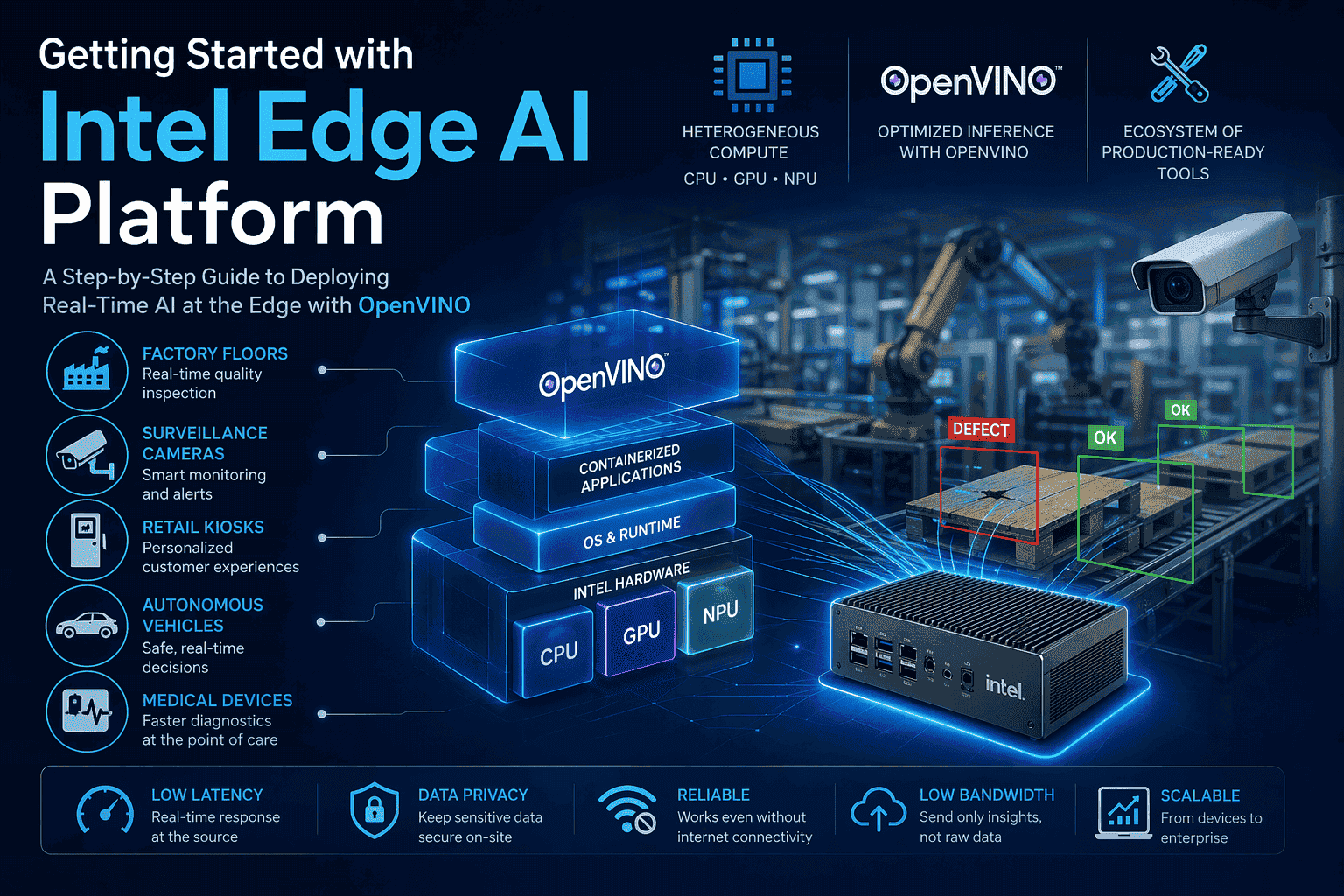
Runs on your hardware: Jetson, Coral, industrial PCs, existing cameras—no lock-in to a single vendor
Zero-cloud, privacy-first: All images and models stay inside your facility—ideal for IP-sensitive and regulated environments
Built for multi-line, multi-site scale: From a single PCB line to global fleets of plants
How Klyff Prescptr Works
Discover & Design
- Walk the line with your operations/quality team
- Identify critical defect modes, escape hotspots, and existing AOI/manual flows
- Define target metrics: escape rate, FPY, PPM, rework cost
Model Training
- Use your historical images and defect records (or capture new data on the line)
- Train vision AI models on your real defects—not generic datasets
- Validate against your quality thresholds and sampling plans
Edge Deployment
- Deploy models to your existing edge hardware (Jetson, Coral, x86, etc.)
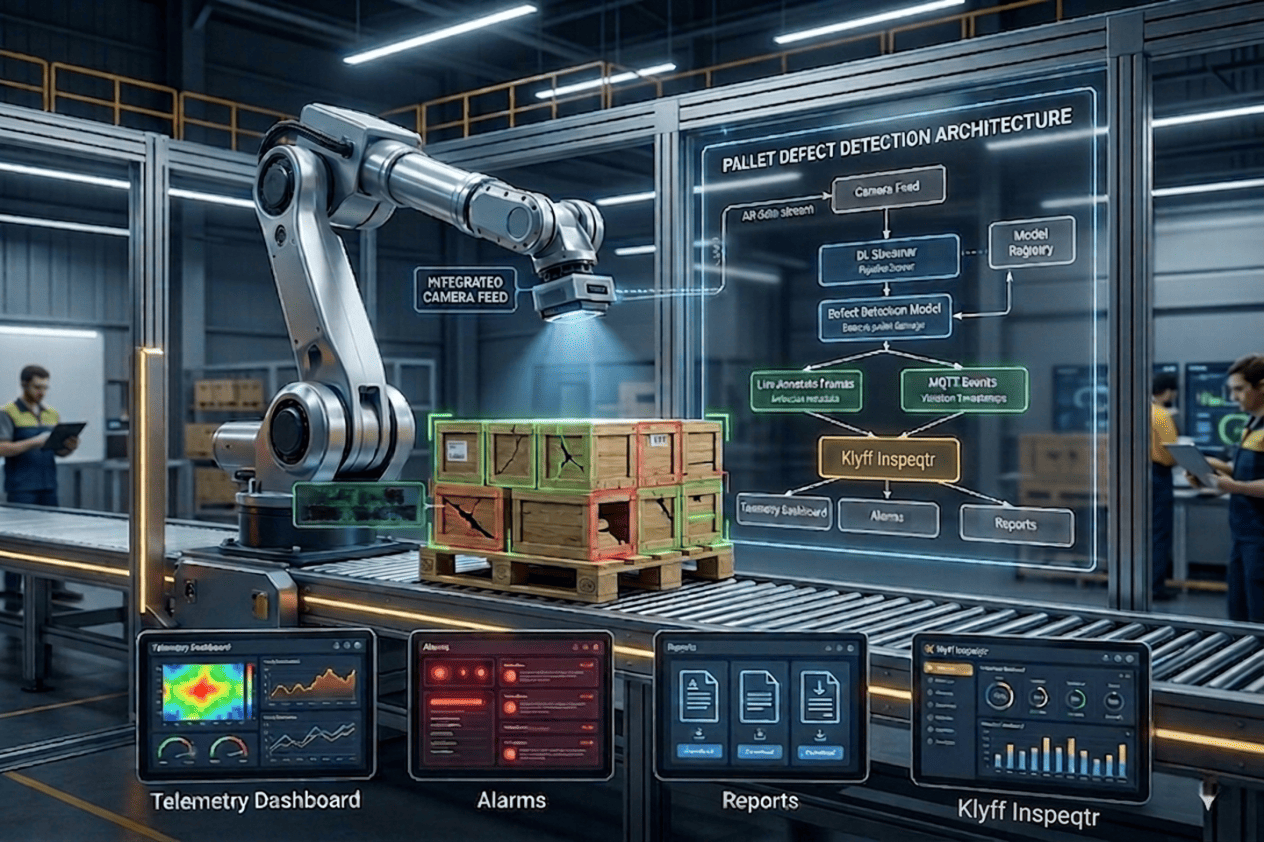
- Integrate with MES/ERP/SCADA/PLC for automatic logging and Andon/alerting
- Run in shadow mode first, then move to live decisions
Continuous Improvement
- Monitor model performance 24×7
- Capture new defect types and process drift
- Automatically retrain and roll out improved models with zero production downtime
Why Klyff Senatr for federated learning
Hardware-agnostic: Bring your own cameras and compute; Klyff optimizes to whatever you have
Zero-cloud architecture: No images leave your site, ever
Full lifecycle MLOps: Versioning, monitoring, retraining, OTA updates are built-in
Built for operations, not just data science: Clear dashboards for FPY, escape rate, and PPM—by line, shift, and defect type
Examples
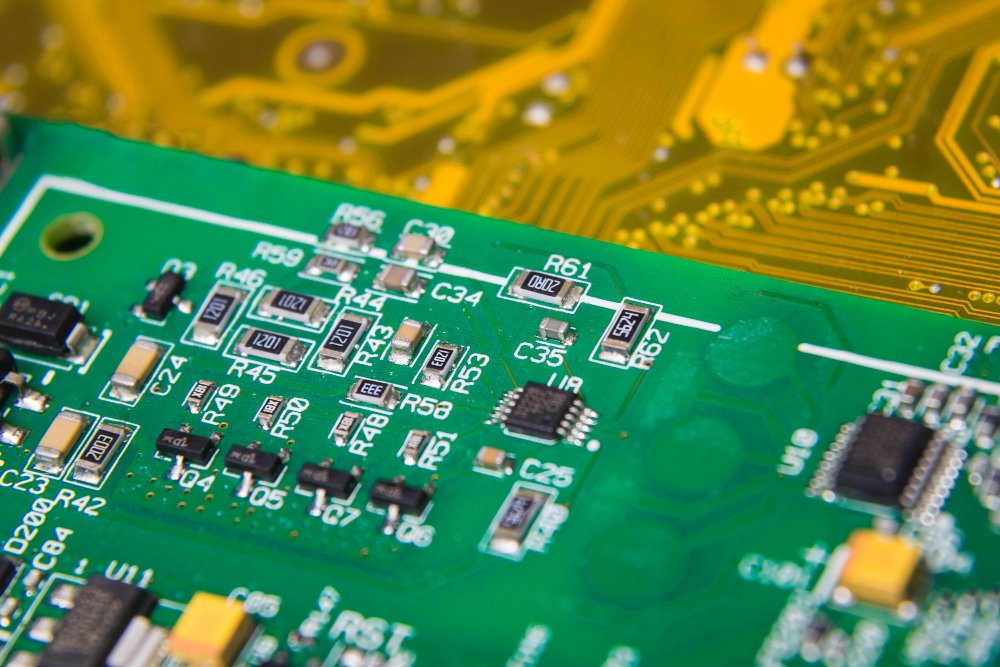
PCB / Electronics Assembly
Solder joints (insufficient, cold joints, bridges/shorts, voids)
Component placement (missing, misaligned, rotated, tombstoning)
Board warpage, pad/trace issues
Integration with AOI data and MES for full traceability
Automotive / Tier-1
Paint defects (runs, sags, orange peel, fish eyes, contamination)
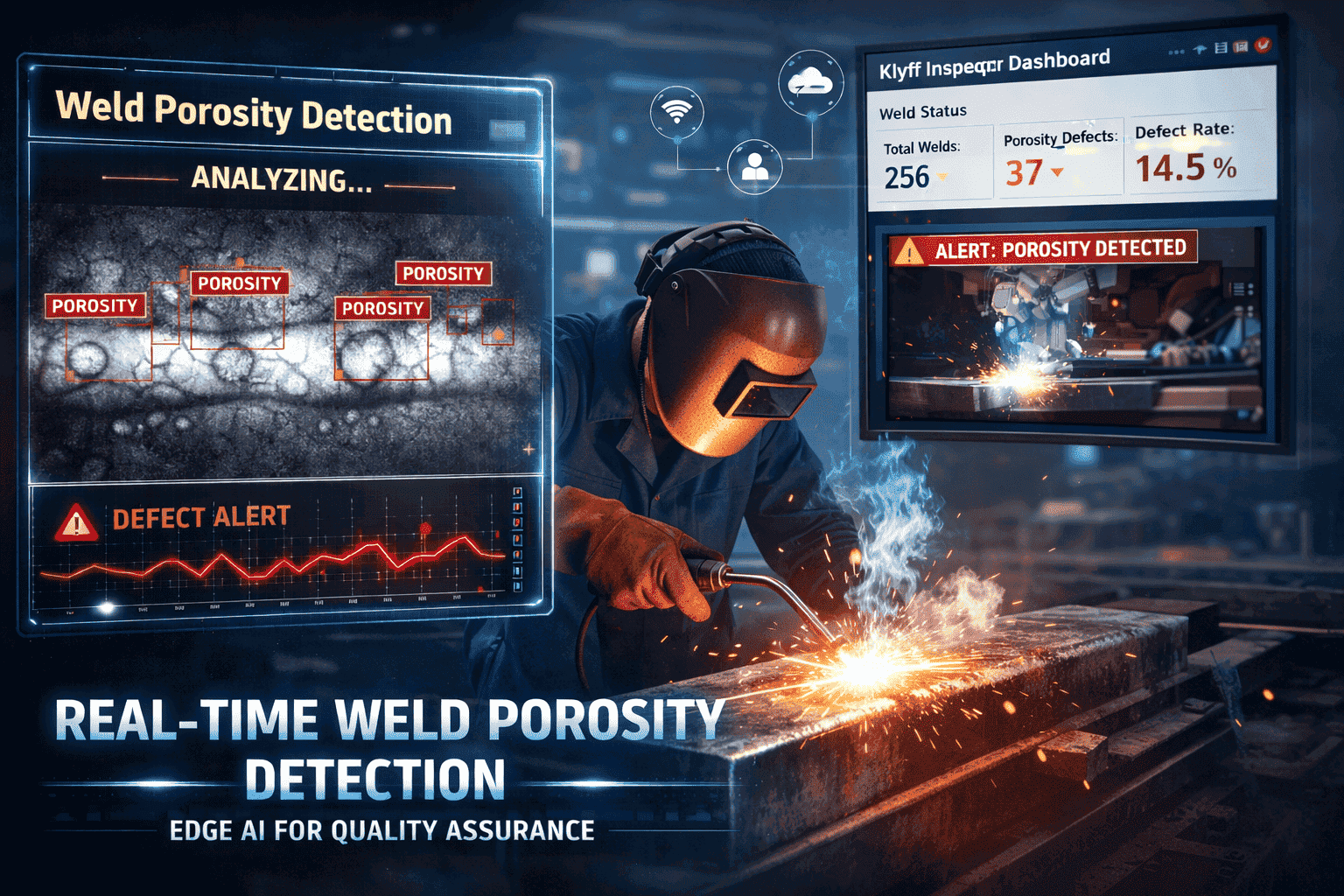
Weld quality (porosity, incomplete welds, spatter)
Assembly verification (presence/absence, orientation, torque-related visuals)
End-of-line appearance checks
Pharma / Regulated
Fill-level verification (vials, syringes, blister packs)
Label presence, content, position, and barcode/QR readability
Blister seal integrity and packaging defects
Audit-ready logs to support FDA and GxP inspections
FAQs
We already have AOI. Why do we need Klyff?
AOI is excellent at structured, 2D rules-based inspection. Klyff adds learning-based models that capture subtle, complex patterns (e.g., weak joints, complex surfaces, combined conditions). Most customers run AOI + Klyff together: AOI for rule-based checks, Klyff for what AOI misses.
Will this slow down our line?
No. Models are optimized to run at, or ahead of, your current takt time. For most PCB and assembly lines, we operate comfortably at full conveyor speed.
How much data do we need to start?
If you already log defects, we can usually start with your existing image sets and grow from there. If not, we run an initial data collection phase on the line (days, not months).
Selected Customer Success Stories
Adaptive Predictive Maintenance
Solder Joint Inspection