

klyff.com

Model Compression & Optimization

Faster models on the Edge device within 4-6 weeks

What we do:

Quantization-aware training (QAT) integrates quantization directly into the training process, simulating low-precision arithmetic (e.g., 8-bit or 4-bit) so the model learns to be robust to quantization noise and maintains accuracy despite reduced bit-widths.

This contrasts with post-training quantization, which often causes sharp accuracy drops; QAT is essential when deploying to memory-constrained hardware like Jetson Nano, Google Coral, or microcontrollers that cannot afford significant accuracy loss.

The result is a production-ready model that is 2–8x smaller and 2–5x faster while preserving the accuracy needed for safety-critical or inspection-sensitive

Neural architecture search automates the discovery of optimal model architectures under real device constraints (memory, latency, power, and compute)—rather than relying on manual trial-and-error or generic model selection. 

Hardware-aware NAS explicitly encodes constraints, such as “≤256 KB RAM and ≤5 ms latency on Cortex-M4,” and discovers architectures that meet these bounds while maximizing accuracy. 

For manufacturing edge deployments, this yields compact, efficient models that run in real-time on the exact hardware in the factory without over-provisioning.

This service uses vendor-specific toolchains and kernels (TensorRT, Coral Compiler, OpenVINO, CMSIS-NN, Arm Ethos-U) to map models onto each platform’s fastest operators, tensor layouts, and hardware accelerators. 

Layer fusion, precision auto-calibration (FP16/INT8), and kernel auto-tuning are applied per-device, yielding 2–10× latency improvements and 30–70% power reduction compared to generic deployments. 

The model behaviour remains identical; only the execution path and performance change.

This structured process characterizes how model accuracy changes when shrinking networks, reducing precision, pruning channels, or adjusting batch sizes—then plots these changes against measured latency and throughput on real hardware. 

Teams use this data to choose evidence-based operating points (e.g., “95% accuracy at 18 ms” versus “97% accuracy at 32 ms”) that align with product SLAs and manufacturing requirements. 

This prevents over-optimization (wasting compute for 0.1% additional accuracy) and under-optimization (missing critical defect detection).

Benchmarking runs standardized test suites on target devices to measure end-to-end latency, throughput, memory footprint, and thermals under realistic workloads and batch sizes. 

These measurements expose bottlenecks in preprocessing, model execution, postprocessing, and I/O, enabling targeted optimization and validating that changes improve user-visible performance, not just synthetic metrics. 

For manufacturing, this includes testing on actual production images/data to ensure real-world defect detection accuracy and speed.

Expected outcomes:

50-70%

Model size reduction

<50ms

Inference latency on target hardware

<7%

Deployment-ready model artifacts

100%

Deployment-ready model artifacts

Our engagement process:

Let us help you with Model Optimization

Selected Customer Success Stories
klyff_favicon

Adaptive Predictive Maintenance

On device inference becomes inaccurate with each passing day. Read how Klyff handled on-device training to keep your models accurate.
klyff_favicon

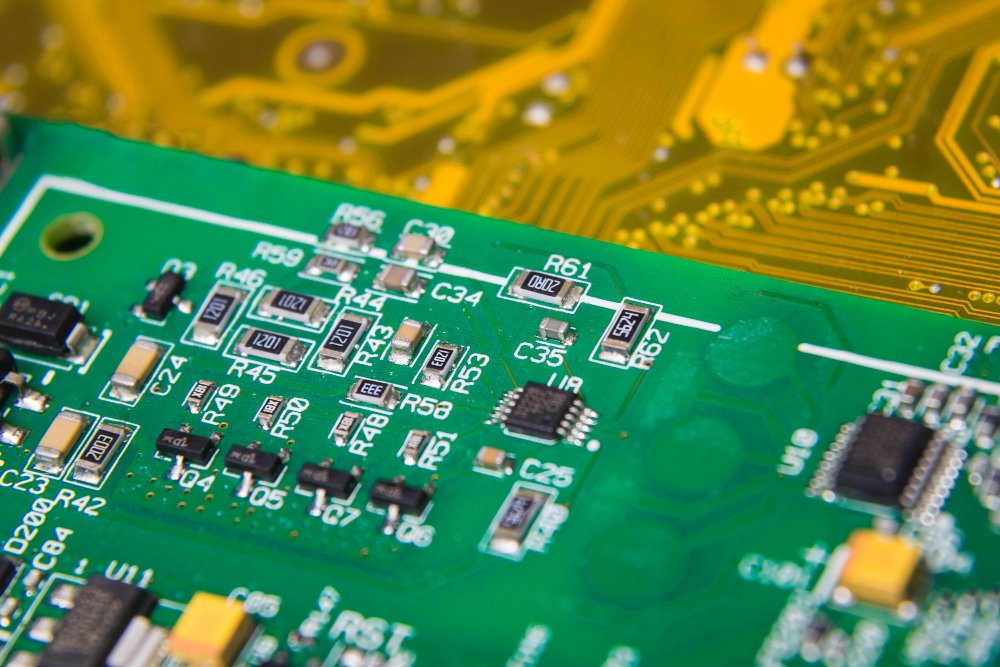
Solder Joint Inspection

Read how Klyff helped reduce false positive rate to <2% and reduce latency from 120ms to 8ms thus resulting in huge cost advtange

klyff_favicon

PPE Compliance in Chemical Plant

Klyff helped a global chemical manufacturer to ensure all workers wore Hazmat suits and respirators in "Zone 1" areas through federated learning
Our Insights to keep you ahead
Scroll to Top